Insect and Spider Identification  
 
 
  HOME
 · Alderfly/Dobsonfly
 · Bees, Ants, Wasps
 · Beetles
 · Bristletails
 · Butterflies, Moths
 · Centipedes
 · Cicada & Similar
 · Cockroaches
 · Dragonfly/Damselfly
 · Earwigs
 · Flies
 · Grasshopper/Crickets
 · Mayflies
 · Mite or Tick
 · Scorpion and Like
 · Snakeflies
 · SPIDERS
 · True Bugs
 · Walkingsticks
 · View ALL
  ABOUT BUGS
 · Identifying Insects
 · Insect Anatomy
 · Insect Mouth Parts
  SCIENTIFIC
 · Dichotomous Keys
 · Taxonomic Orders
 · Insect Orders
 · Scientific Names
 · Metamorphosis
 · Process of Molting
  MISCELLANEOUS
  · Bees and Wasps
  · Beneficial Insects
  · Field Guides

  · Color the Bugs
  · Spider Identification

Insect Identification > Description of the Emerald Ash Borer

 

Details of the Emerald Ash Borer

CATEGORY:
Beetle

COMMON NAME:
"Emerald Ash Borer"

SCIENTIFIC NAME:
(Agrilus planipennis)

TAXONOMY:
(View Orders)
Kingdom: Animalia
  Phylum: Arthropoda
   Class:Insecta
    Order: Coleoptera
     Family: Buprestidae
      Genus: Agrilus
       Species: planipennis


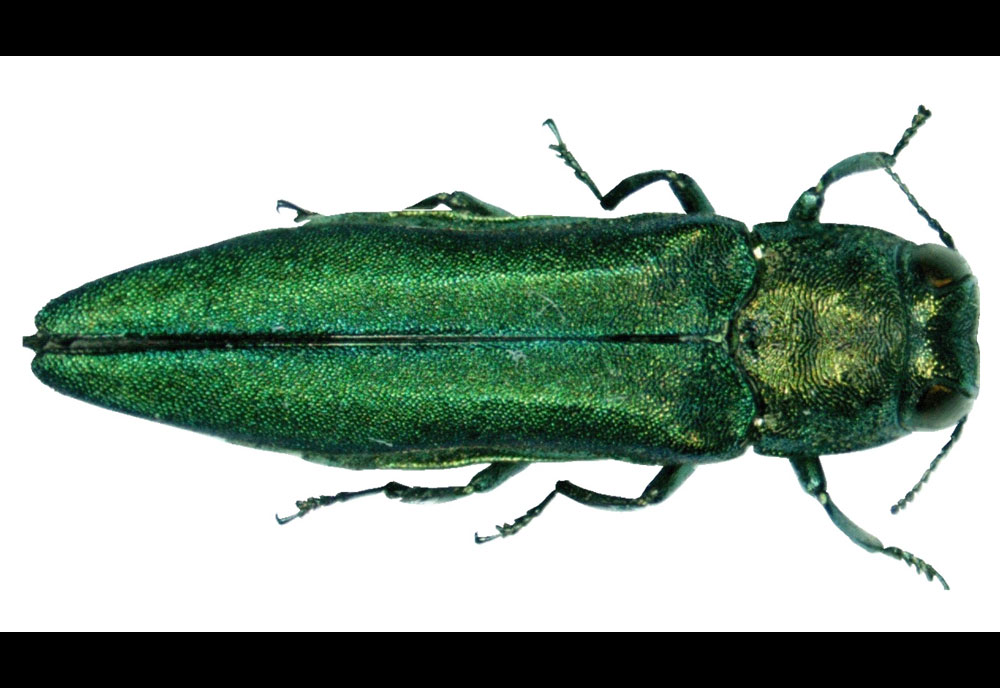
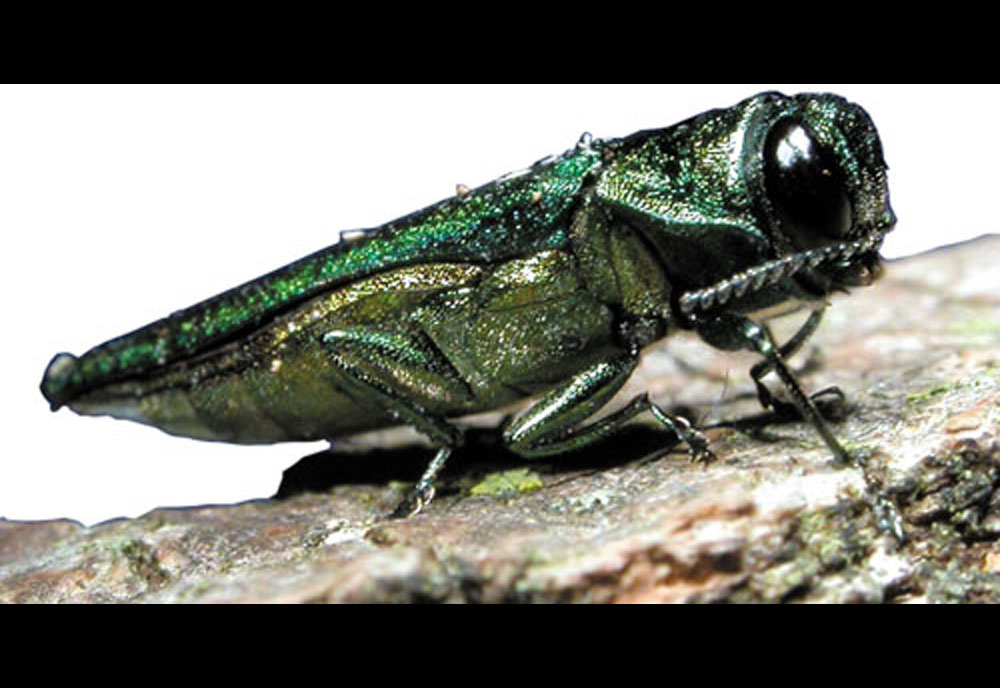
CHARACTERISTICS: The Emerald Ash Borer is a recent addition to the line of tree-boring beetles in North America. As recently as June 2002, the beetle was identified in Windsor, Ontario, Canada and in the Southeast portion of the state of Michigan, USA. It is a highly invasive species that is highly recognizable by its metallic green coloring. The insect is makes no distinction between natural growth or planted growth and attacks the leaves and bark of the Ash tree species accordingly.

The Emerald Ash Borer is actually a native of Asia, being found locally in parts of Japan, the Koreas, China and Mongolia and Russia. It is presumed that the insect arrived to North America by mistake as part of wood packing material in shipping as long ago as a decade or two ago. What makes the Emerald Ash Borer such a feared tree killer is that it takes no reservation in the age or size of the targeted tree and has been proven to kill any Ash tree in the species.

Emerald Ash Borers (EAB) are related to other species of North American tree borers, those these are native to the land. In that respect, they share some similarities in how they feed, mate and otherwise operate into adulthood. Adults appear in the late Spring months and into early August as one generation per year. The adults that emerge leave a small yet tell-tale "D" shaped hole in the bark of the tree they inhabit and proceed to feed off of the trees foliage before mating several weeks later. Upon mating, the female can lay upwards of 50 to 100 eggs on the surface of the tree, allowing the larvae easy access to begin boring into the tree once born. Larvae access the area just under the bark and continue boring (feeding on the sapwood) from summer season into the fall. Adulthood for these larvae will occur the following year in the middle to late-stage spring months.

Of the two stages in the Emerald Ash Borer development, it is the larval stage that has many in North America worried as Ash trees represent a tremendous amount to the natural beauty, ecosystem and economy of the land. Though adult beetles feed on the leaves, the larvae are instrumental in the internal destruction of the tree itself with the only known resolution to the insects expansion is the removal of all infected trees. Infected trees are noticeable by their thinning tops and death of the tree can result in a little as a few years.

Research and quarantine of infected areas and trees is currently ongoing. It is said that the presence of Woodpeckers might be an indication of infestation and Woodpeckers seem enjoy hunting the larvae. At this time, the EAB feeds only on Ash trees (known as Fraxinus spp.). If you suspect your Ash tree of infestation, the following USDA/Michigan Department of Agriculture website has contact information for you to use as necessary:

http://www.emeraldashborer.info/index.cfm


ADULT SIZE (Length, not including legs):
10mm to 13mm (0.39in to 0.51in) (Compare Size)

IDENTIFYING COLORS: Emerald, Green, Metallic

North American Reach
Michigan, Illinois, Indiana, Ohio, West Virginia, Pennsylvania, Maryland
 
Compare Bug Size Insect Dichotomous Key Insect Anatomy
 
 
BugFinder - Search Insects by Color and State
Select dominant color, secondary color and state.
Dominant Color:
Secondary Color:
Your State:

Insect Field Guides


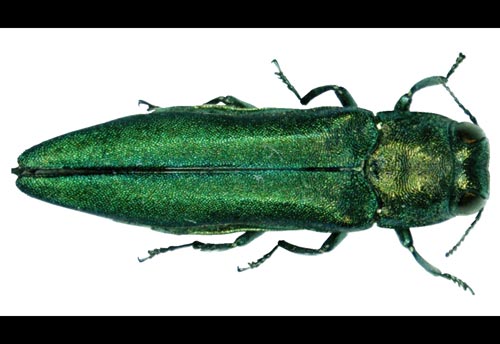
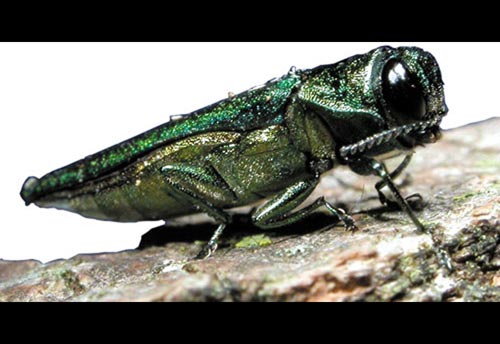
Picture of Emerald Ash Borer
Courtesy of the USDA.gov website


©2005-2010 InsectIdentification.org • All Rights Reserved • DisclaimerPrivacy Policy
Site Design by Runaway Studios
Business Consulting by KyleWilliams.com

Comments/Suggestions: InsectIdentification at gmail dot com


eXTReMe Tracker