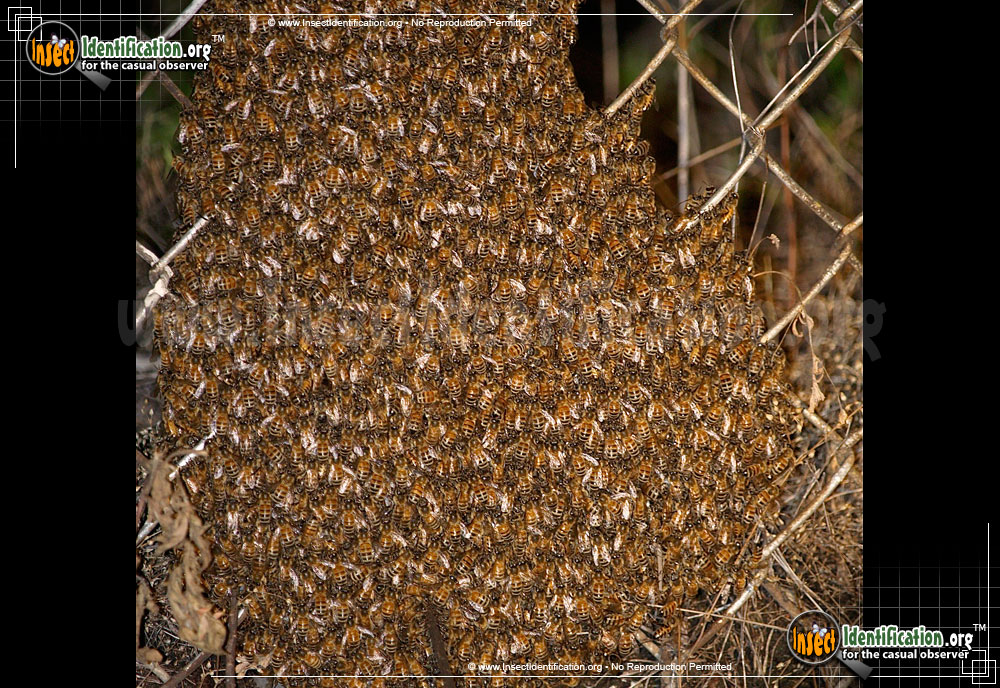
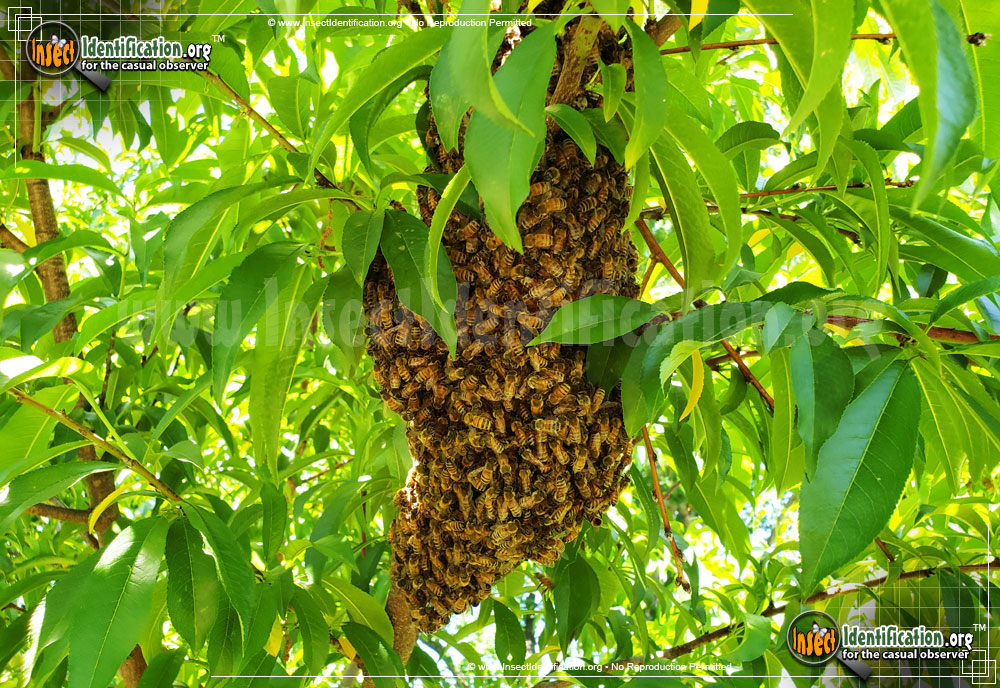
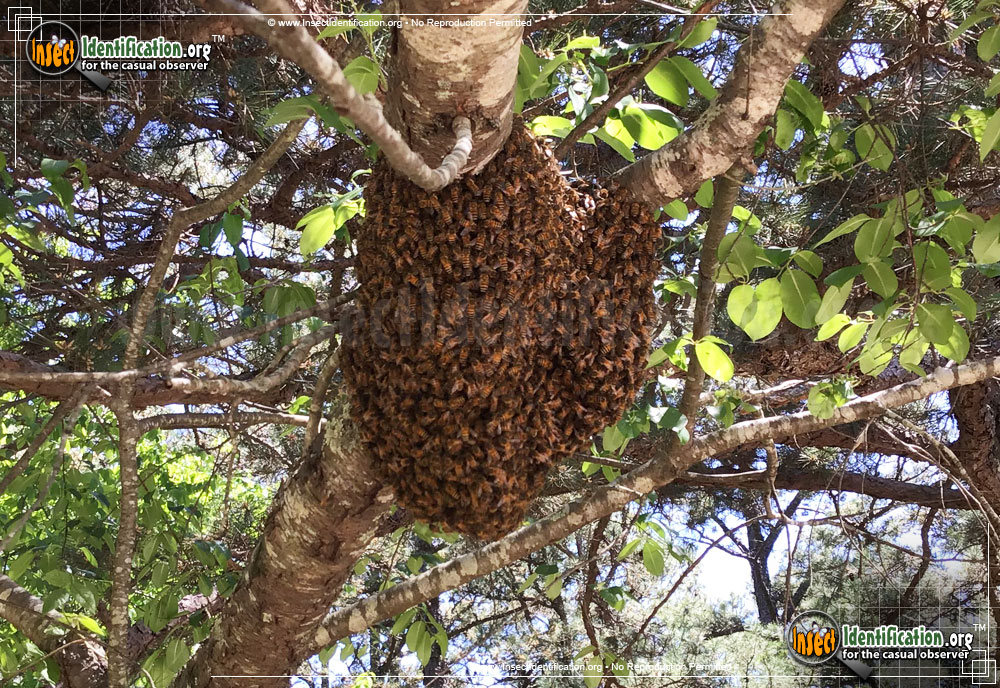
Occupations for a Honey Bee break down into one of three categories: worker bee, drone, or queen Bee. Unlike wasps, Honey Bees create hives out of wax (not a paper-like substance) and only swarm when they are reproducing. Swarms occur when the old queen leaves with a portion of the hive while those that stay behind work with a new queen recently born inside the hive. A female larva can be fed a special diet by the worker bees, which will make her a fertile queen. Other female larvae are given a regular diet that renders them infertile.
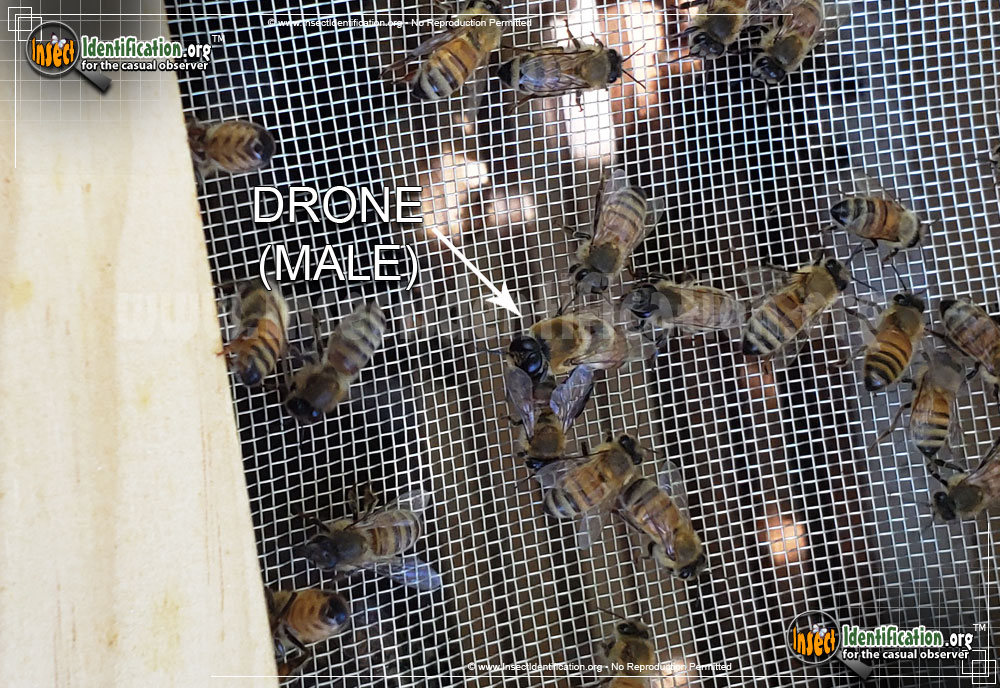
Worker bees are these sterile females and they measure between 9 and 18mm long while a queen bee can be 18 to 20mm in length. Male drones lack stingers and reside in the hive until reproduction is complete. They are then killed by the worker bees and removed from the hive.
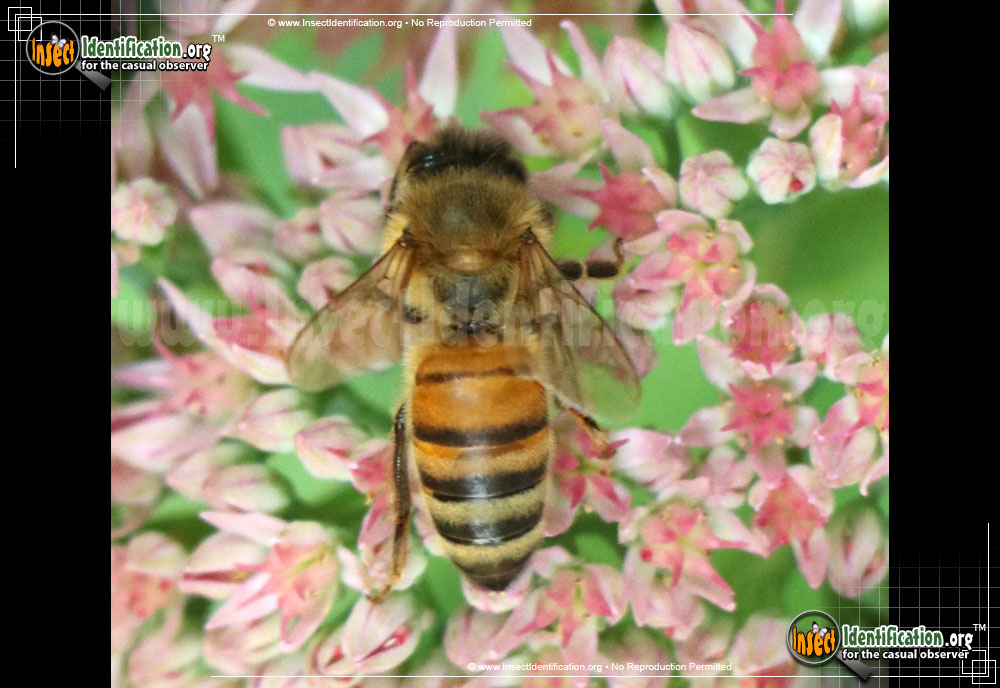
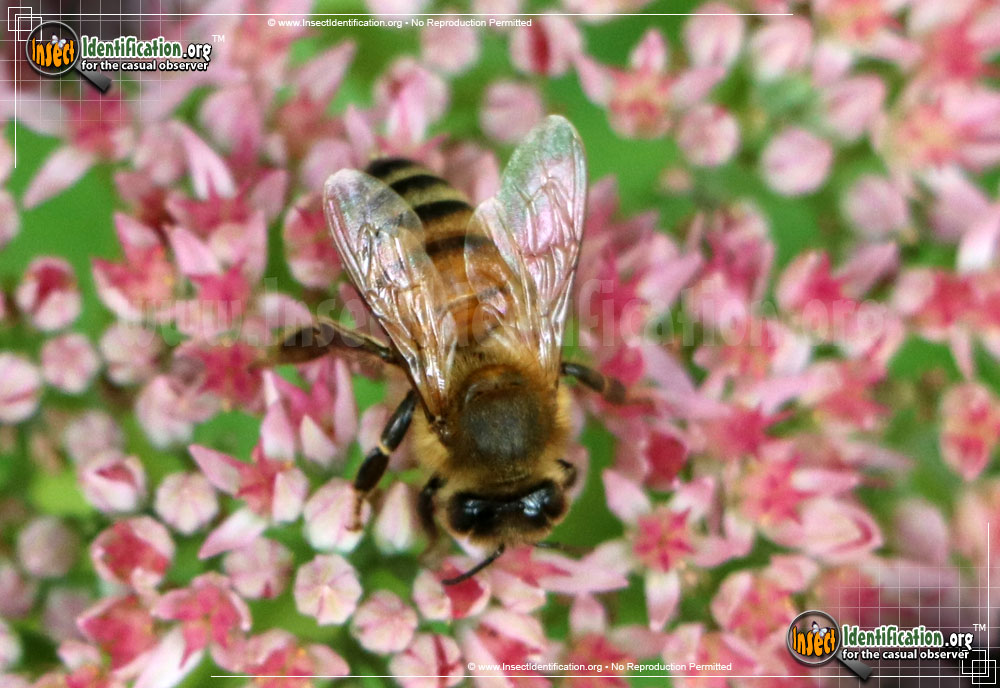
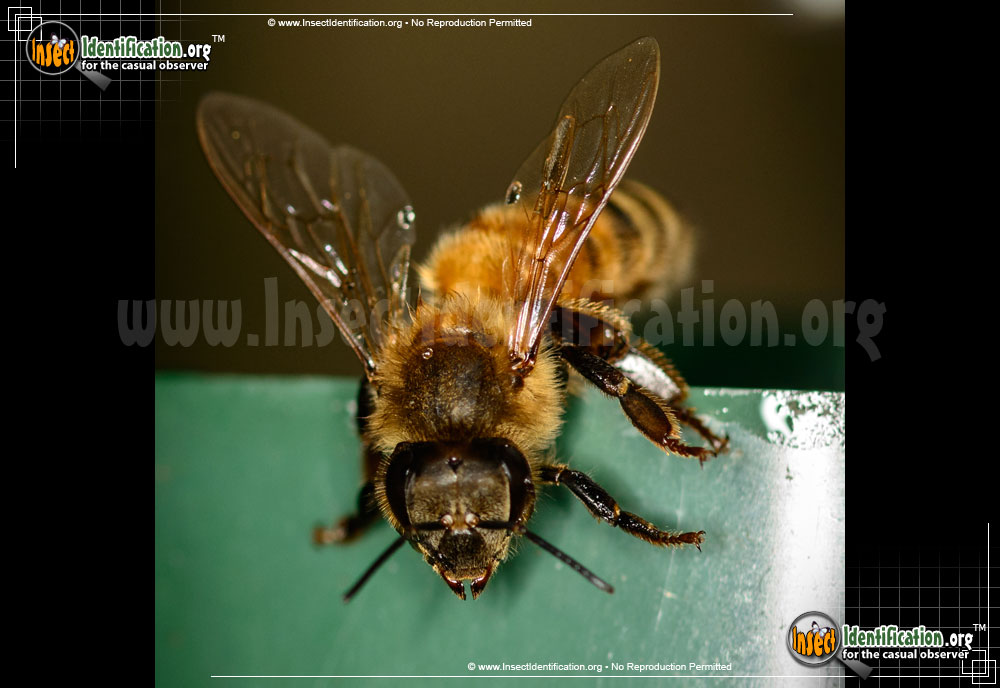
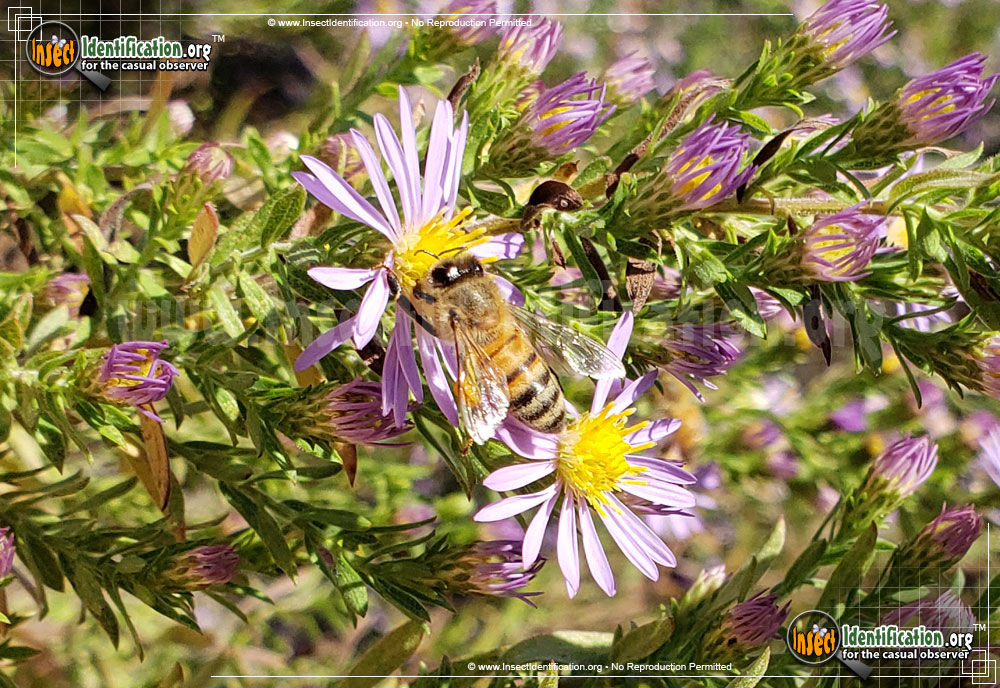
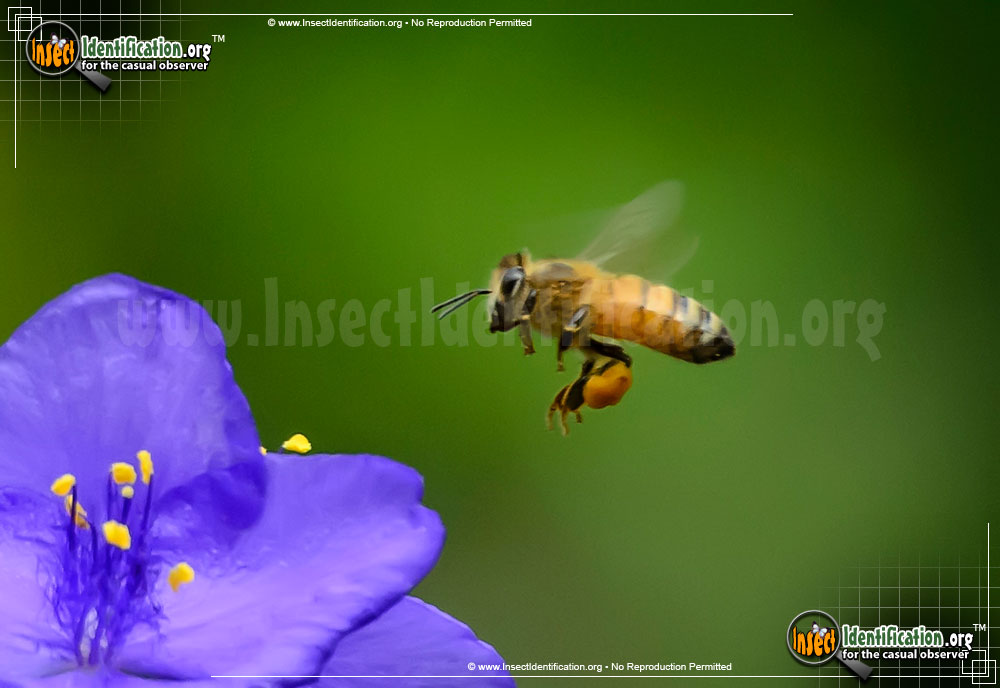
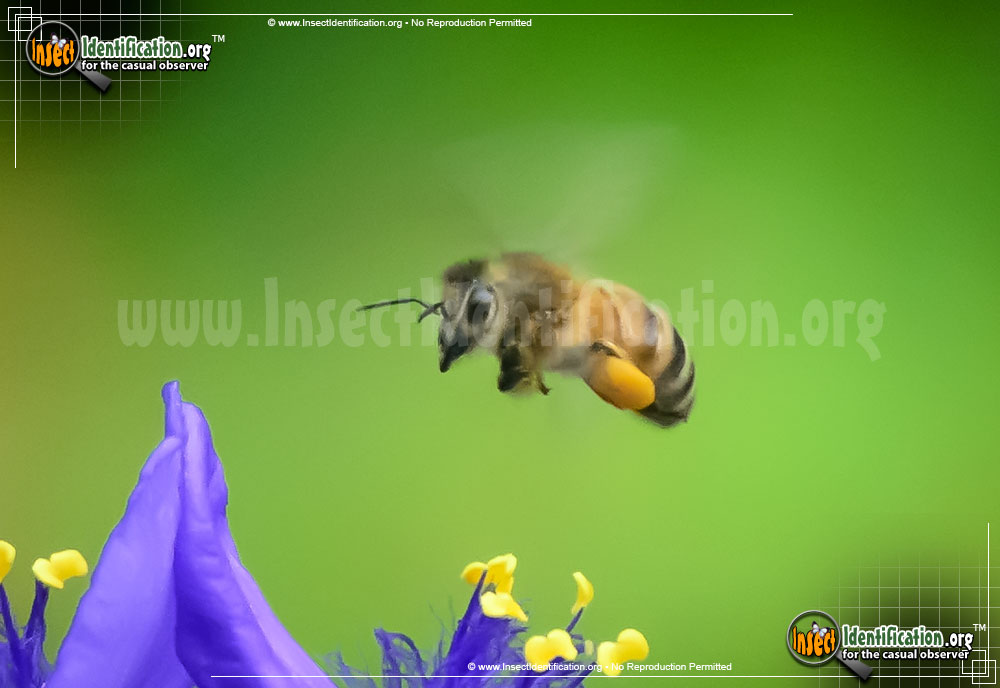
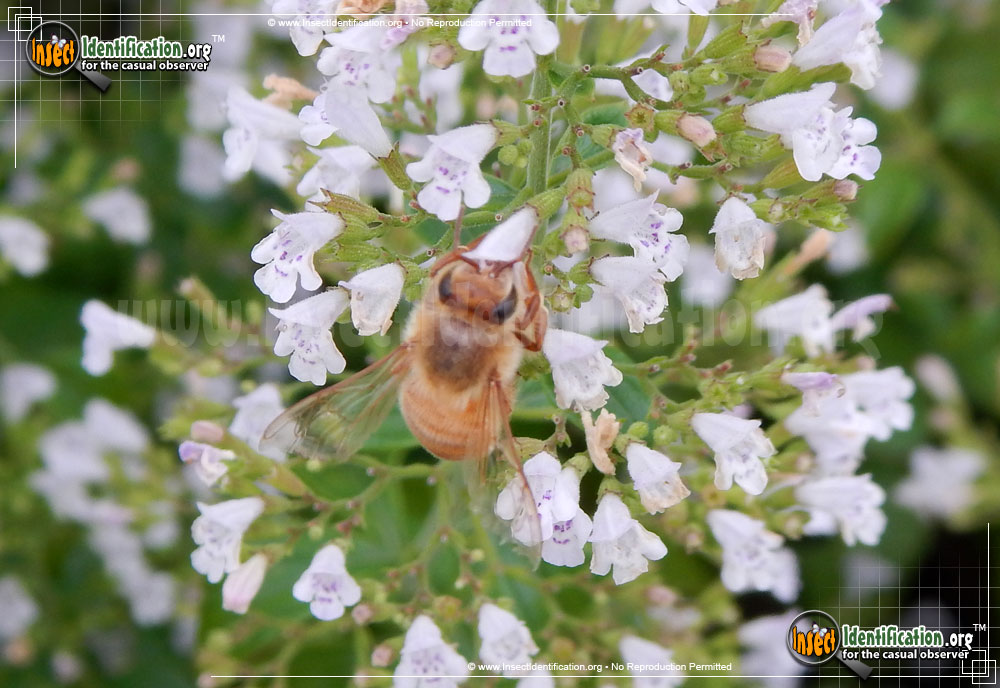
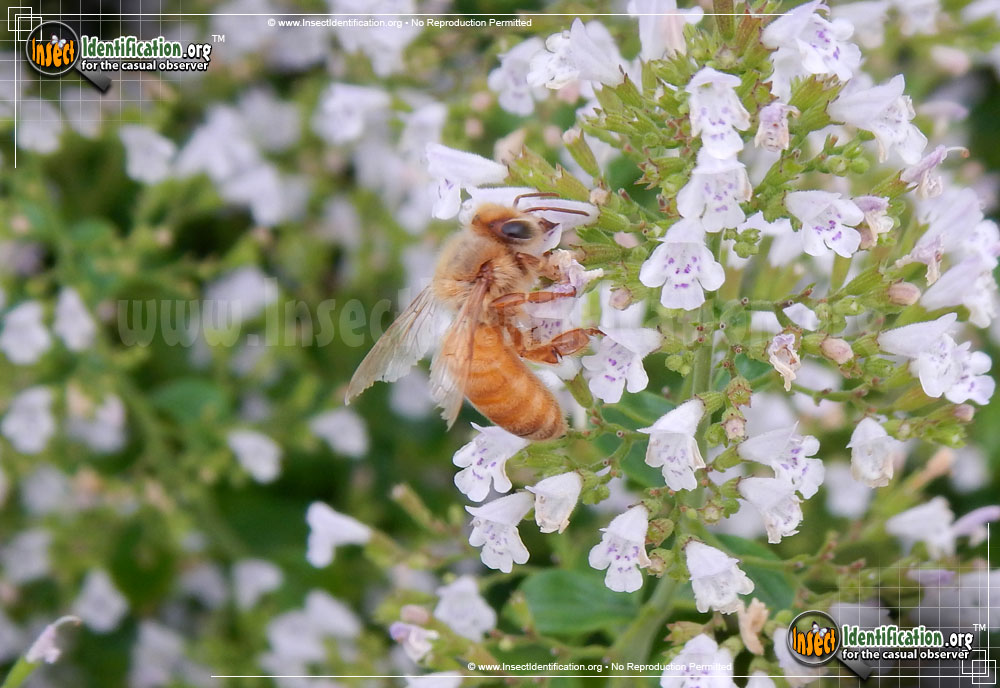
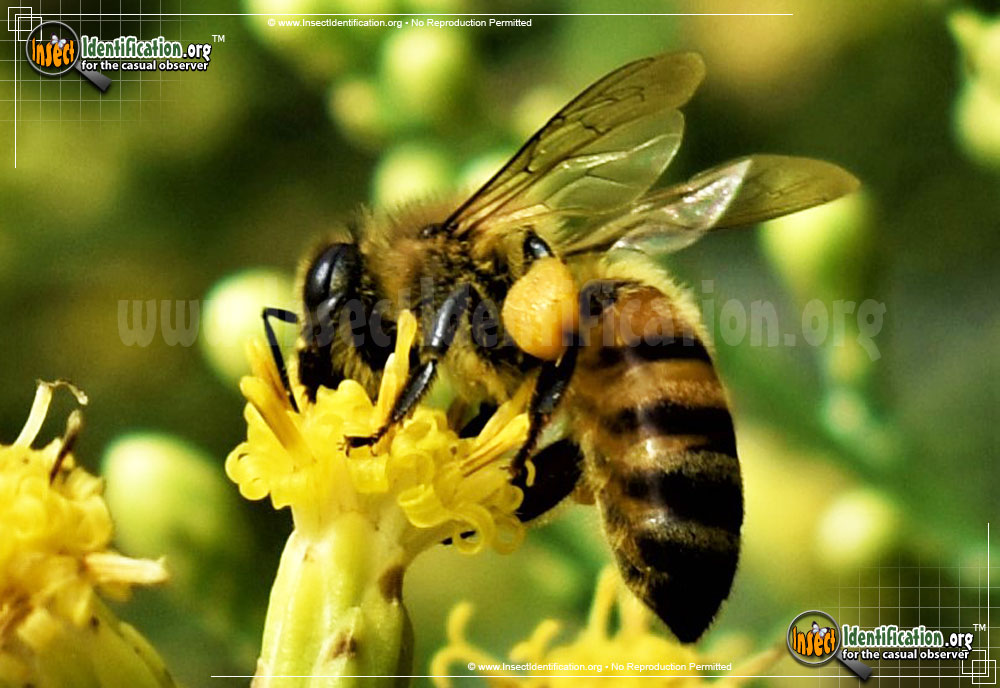
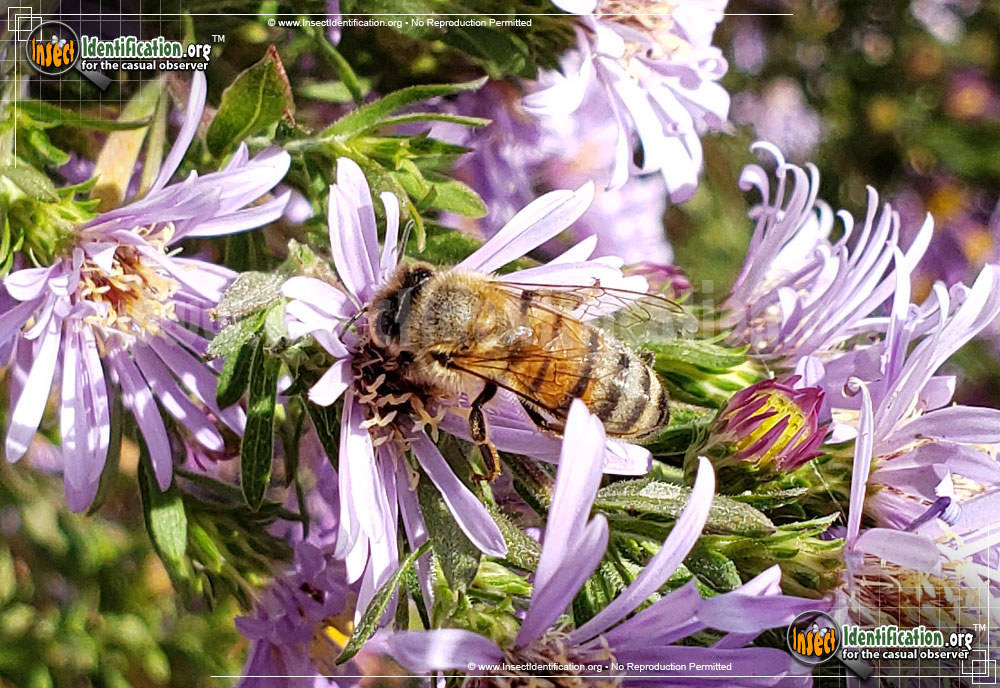
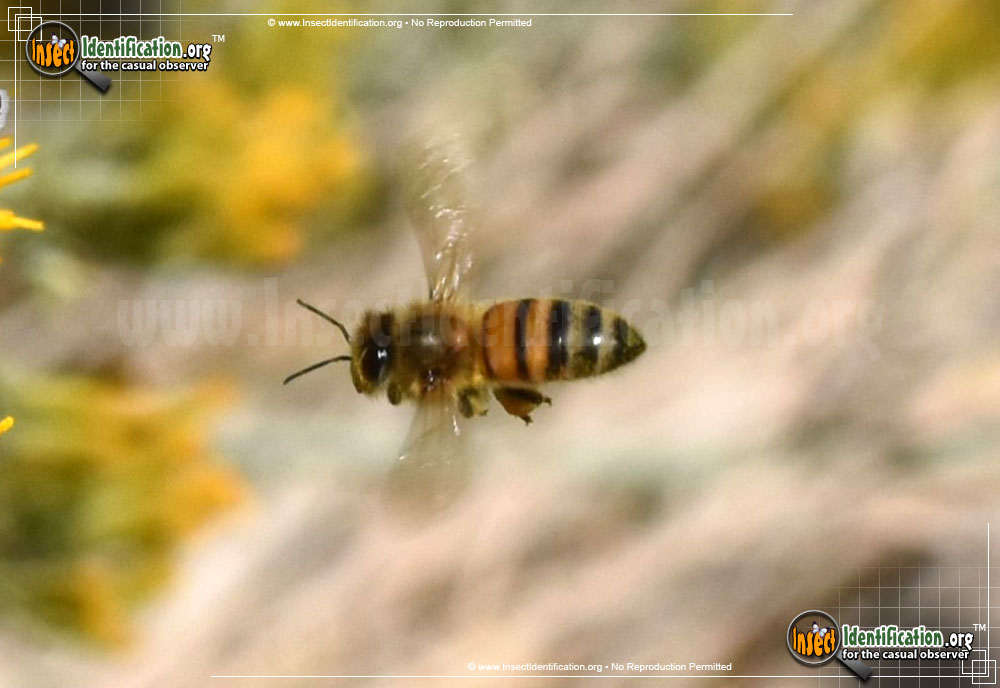
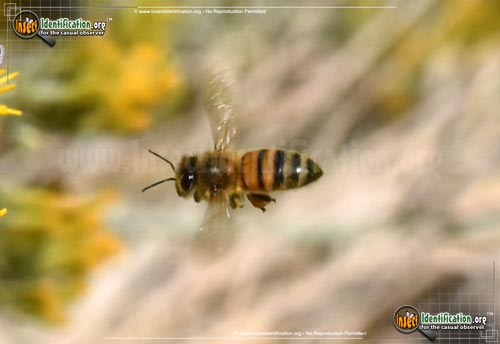
Worker bees feature a nearly all-black head with a body coloring of golden brown and black with dull orange patches. Yellow bands are very visible on the abdomen and the wings are clear. The entire body is covered in tiny hairs with a dense amount sitting both on the head and the body.
Honey Bees are naturally found throughout the United States but they are also bred commercially. Currently, Honey Bee populations are disappearing from commercial hives for some known and still unknown reasons. Entomologists call this anomaly CCD, or Colony Collapse Disorder. Honey Bees are a super-pollinator for most fruits and vegetables grown for human consumption, and a limited number of them directly effects how much fruit is generated on a fruit or nut tree, berry bush or vegetable patch.
Note: The above text is EXCLUSIVE to the site www.InsectIdentification.org. It is the product of hours of research and work made possible with the help of contributors, educators, and topic specialists. If you happen upon this text anywhere else on the internet or in print, please let us know at InsectIdentification AT gmail DOT com so that we may take appropriate action against the offender / offending site and continue to protect this original work.
* MAP NOTES: The territorial heat map above showcases (in red) the states and territories of North America where the Honey Bee may be found (but is not limited to). This sort of data is useful when attempting to see concentrations of particular species across the continent as well as revealing possible migratory patterns over a species' given lifespan. Some insects are naturally confined by environment, weather, mating habits, food resources and the like while others see widespread expansion across most, or all, of North America. States/Territories shown above are a general indicator of areas inhabited by the Honey Bee. Insects generally go where they please, typically driven by diet, environmental changes, and / or mating habits.





 Colors: red; brown; black; orange; yellow