Insect and Spider Identification  
Thumbnail picture of a Giant Mayfly
Giant Mayfly
Thumbnail picture of the Golden Northern Bumblebee
Golden Northern Bumblebee
Thumbnail image of the Pale Windscorpion
Pale Windscorpion
Thumbnail picture of a Grass Spider
Grass Spider
Thumbnail image of a Johnson Jumping Spider
Johnson Jumping Spider
Cicada Molting
  HOME
    · Alderfly/Dobsonfly
    · Bees, Ants, Wasps
    · Beetles
    · Bristletails
    · Butterflies, Moths
    · Centipedes
    · Cicada & Similar
    · Cockroaches
    · Dragonfly/Damselfly
    · Earwigs
    · Flies
    · Grasshopp/Crickets
    · Mayflies
    · Mite or Tick

    · Scorpion or Like
    · Snakeflies
    · Spiders
    · True Bugs
    · Walkingsticks
    · View ALL
  ABOUT BUGS
    · Dichotomous Key
    · Identifying Insects
    · Insect Anatomy
    · Insect Mouth Parts
  SCIENTIFIC
    · Insect Orders
    · Scientific Names
    · Metamorphosis
    · Process of Molting
  MISCELLANEOUS
    · Bees and Wasps
    · Beneficial Insects
    · Field Guides
    · Survive Outdoors

InsectIdentification > Insect Description
 

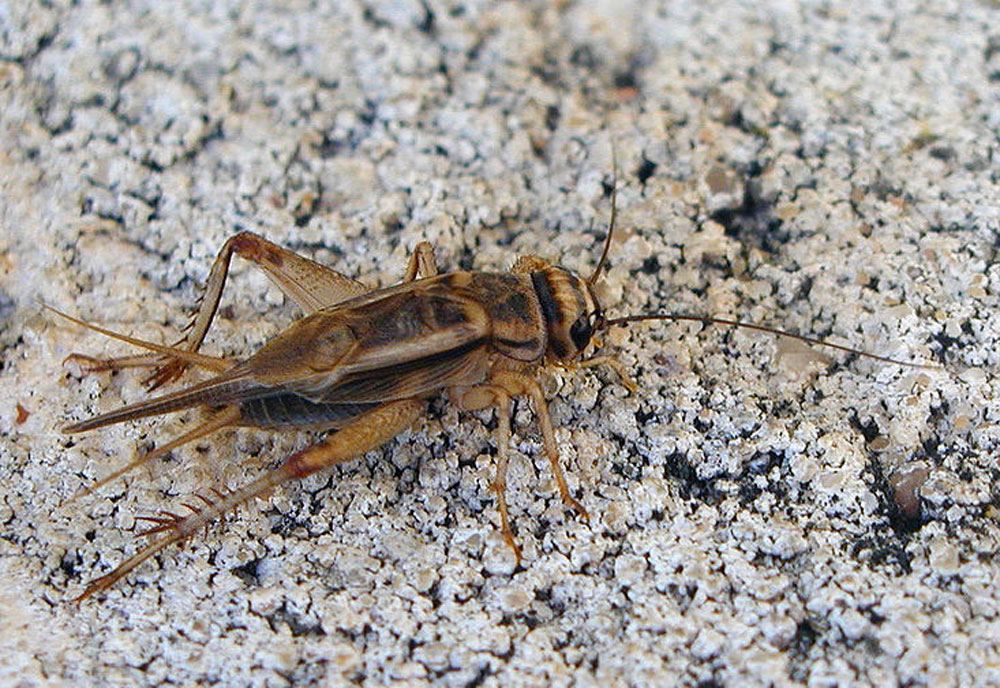
House Cricket


Other Name(s): Cricket on the Hearth

Characteristics: Crickets can appear very similarly to their related cousins - the Grasshopper - but can be discerned by the fact that common crickets only have 3 tarsal segmented body sections. Crickets are a very common nighttime sound as males produce their chirping sounds in an effort to attract females. Though both grasshoppers and crickets can make these sounds, crickets maintain a higher pitch. House Crickets are most often times held up as a unwanted in-house guest, mostly due to their propensity to chirp - and quite loudly at that.

The House Cricket might be startling to come across at first glance, as their shape and quickness can turn some people off and find them threatening as they do spiders. House Crickets tend to be found indoors most of the time, particularly anywhere there is a supply of food waste such as crumbs, thusly the kitchen of any home or restaurant will do.

Males are smaller in 15mm to 19mm sizes while the "chubby" females come in between 15mm and 21mm lengths. Both sexes contain wings that sit on the abdomen and are shorted when compared to that of the common grasshopper. Identifying colors vary with an in-between of yellow to brown.

North American reach includes (may not be limited to): Alabama, Alaska, Arizona, Arkansas, California, Colorado, Connecticut, Delaware, Florida, Georgia, Hawaii, Idaho, Illinois, Indiana, Iowa, Kansas, Kentucky, Louisiana, Maine, Maryland, Massachusetts, Michigan, Minnesota, Mississippi, Missouri, Montana, Nebraska, Nevada, New Hampshire, New Jersey, New Mexico, New York, North Carolina, North Dakota, Ohio, Oklahoma, Oregon, Pennsylvania, Rhode Island, South Carolina, South Dakota, Tennessee, Texas, Utah, Vermont, Virginia, Washington, West Virginia, Wisconsin, Wyoming

Category: Grasshopper or Cricket
Common Name: House Cricket
Scientific Name: (Acheta domestica)

Kingdom: Animalia
  Phylum
: Arthropoda
   Class:
Insecta
    Order
: Orthoptera
     Family: Gryllidae
      Genus: Acheta
       Species: domestica


Compare Bug Size

BugFinder - Search Insects by Color and State
Bugfinder Search Engine Select dominant and secondary color then your state.
Dominant Color:
Secondary Color:
State:


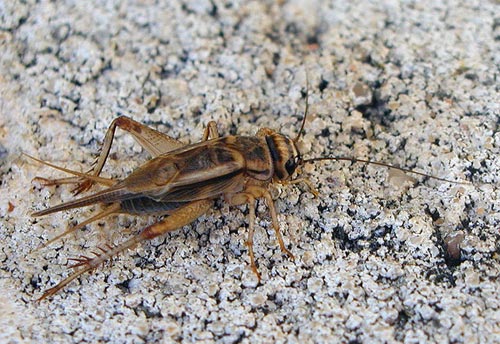
Picture of House Cricket
Courtesy of www.srh.noaa.gov


©2005-2009 InsectIdentification.org • All Rights Reserved • DisclaimerPrivacy Policy
Site Design by Runaway Studios
Business Consulting by KyleWilliams.com

Comments/Suggestions: InsectIdentification at gmail dot com


eXTReMe Tracker