Insect and Spider Identification  
 
 
  HOME
 · Alderfly/Dobsonfly
 · Bees, Ants, Wasps
 · Beetles
 · Bristletails
 · Butterflies, Moths
 · Centipedes
 · Cicada & Similar
 · Cockroaches
 · Dragonfly/Damselfly
 · Earwigs
 · Flies
 · Grasshopper/Crickets
 · Mayflies
 · Mite or Tick
 · Scorpion and Like
 · Snakeflies
 · SPIDERS
 · True Bugs
 · Walkingsticks
 · View ALL
  ABOUT BUGS
 · Identifying Insects
 · Insect Anatomy
 · Insect Mouth Parts
  SCIENTIFIC
 · Dichotomous Keys
 · Taxonomic Orders
 · Insect Orders
 · Scientific Names
 · Metamorphosis
 · Process of Molting
  MISCELLANEOUS
  · Bees and Wasps
  · Beneficial Insects
  · Field Guides
  · Color the Bugs
  · Spider Identification

Insect Identification > Description of the Northern Walkingstick
 

Details of the Northern Walkingstick

CATEGORY:
Walkingstick or Timema

COMMON NAME:
"Northern Walkingstick"

SCIENTIFIC NAME:
(Diapheromera femorata)

TAXONOMY:
(View Orders)
Kingdom: Animalia
  Phylum: Arthropoda
   Class:Insecta
    Order: Phasmatodea
     Family: Phasmidae
      Genus: Diapheromera
       Species: femorata

OTHER NAME(S):
Walkingstick


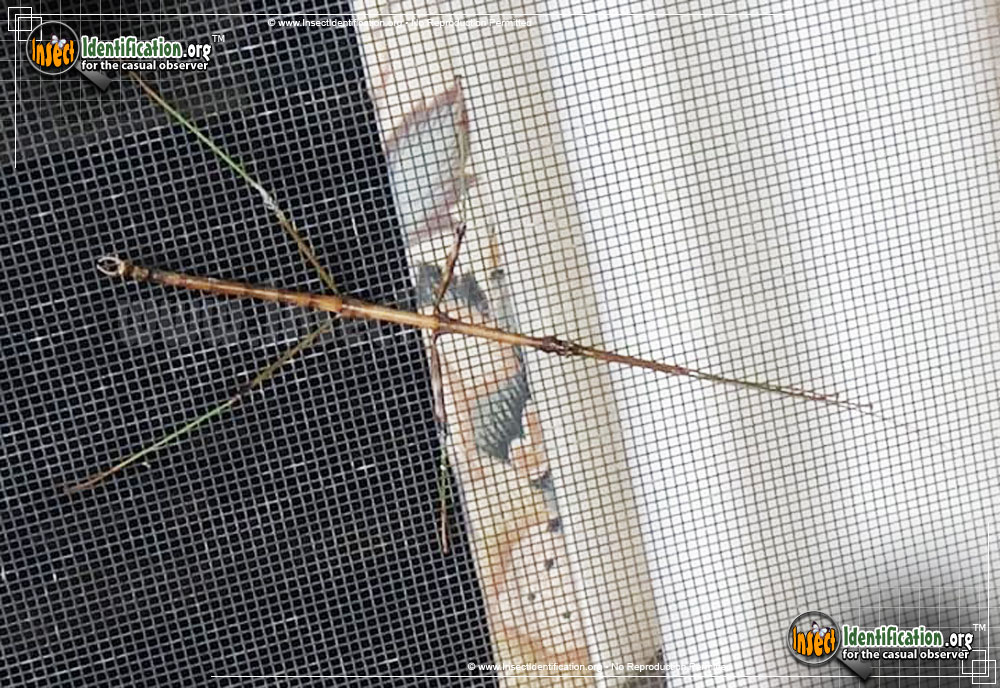
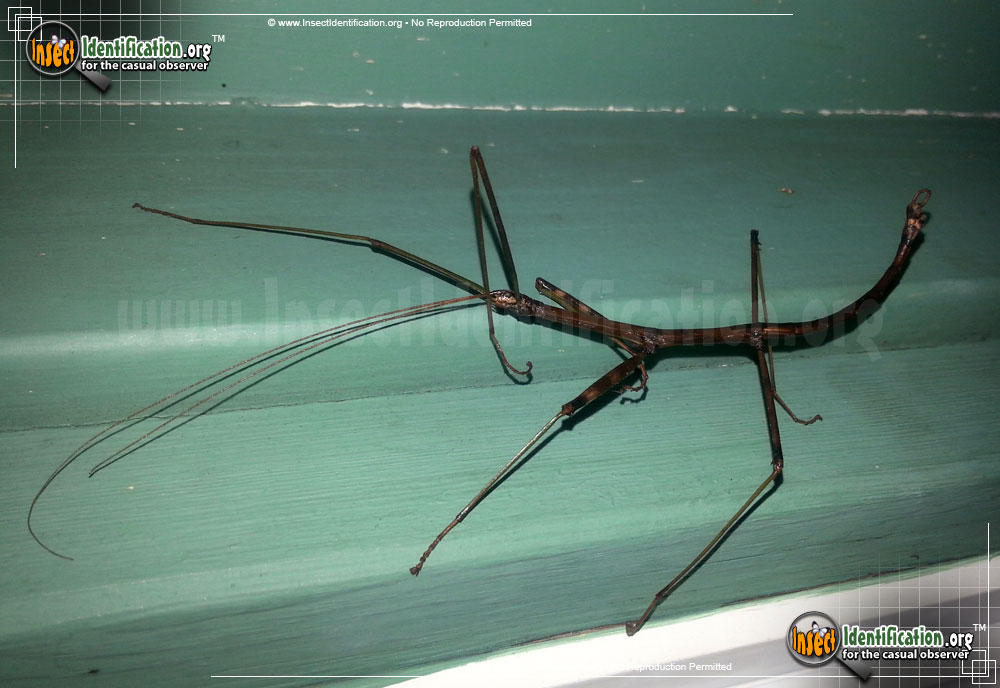
CHARACTERISTICS: Northern Walkingsticks are a child’s favorite type of bug, if they chose to be brave enough to handle any insect. They are unique in their chameleon-like design and are completely harmless to the handler - choosing instead to feed on the deciduous foliage of local trees and shrubs.

Northern Walkingsticks vary in size between the sexes. Males will generally measure out at about 75mm whilst females come in much larger varieties at about 95mm. Visually, the Walkingstick appears as a small branch, suitable for avoiding predators and capturing prey. Males will usually take on a more stricter brown color whereas the female will appear to be a more green brown. Antennae are common on both sexes and are about two-thirds the size of the overall body.

Walkingsticks will lay their eggs in the coming winter onto the ground where nymphs will open out and climb up nearby vegetation to feed. Walkingsticks will lay one egg at a time.

For a little fun, should a Northern Walkingstick land on you, some old customs suggest it is a sign that someone will be visiting your shortly.


IDENTIFYING COLORS: green; brown

North American Reach

Maine, New Hampshire, Michigan, Massachussetts, New York, Delaware, Connecticut, New Jersey, Maryland, Virginia, North Carolina, South Carolina, Georgia, Florida, Alabama, Mississippi, Louisiana, Texas, New Mexico, Colorado, Wyoming, Montana
 
Compare Bug Size Insect Dichotomous Key Insect Anatomy
 
 
BugFinder - Search Insects by Color and State
Select dominant color, secondary color and state.
Dominant Color:
Secondary Color:
Your State:

Insect Field Guides


Courtesy of www.nps.gov


©2005-2010 InsectIdentification.org • All Rights Reserved • DisclaimerPrivacy Policy
Site Design by Runaway Studios
Business Consulting by KyleWilliams.com

Comments/Suggestions: InsectIdentification at gmail dot com


eXTReMe Tracker